Tummy Tuck

Tummy Tuck (Abdominoplasty)

Restore a flat, toned midsection

Ready to take the next step?

What is Tummy Tuck?

A tummy tuck removes excess skin and fat from the abdomen while tightening the abdominal muscles to create a flatter, firmer midsection. It is one of the most transformative body contouring procedures available, particularly for patients who have experienced significant weight loss or pregnancy.

  • AnesthesiaGeneral Anesthesia
  • SettingOutpatient Surgery Center
  • Recovery1–4 weeks
Schedule Consultation 312-535-2200

What Tummy Tuck can do for you

  • Removes excess abdominal skin and fat
  • Tightens separated or weakened abdominal muscles
  • Creates a flatter, more toned midsection
  • Improves the appearance of stretch marks below the navel
  • Long-lasting results with stable weight
  • Often combined with liposuction for enhanced contouring

Good candidates typically…

  • Have excess abdominal skin following pregnancy or weight loss
  • Have separated abdominal muscles (diastasis recti)
  • Are at or near their goal weight
  • Are non-smokers or willing to quit before surgery
  • Have realistic expectations about outcomes
  • Are in good overall health

What to expect

A tummy tuck is performed under general anesthesia, typically as an outpatient procedure. Dr. Rosett makes a horizontal incision just above the pubic area, removes excess skin and fat, and tightens the underlying abdominal muscles. The remaining skin is pulled down and sutured closed. A second incision around the navel may be made to reposition it naturally. The procedure typically takes 2–3 hours.

Your recovery timeline

Most patients return to light activity within 1–2 weeks and resume normal activities within 4–6 weeks. A compression garment is worn for several weeks to minimize swelling and support healing. Final results are visible within 3–6 months as swelling fully resolves.

Our Amazon Storefront

Browse our curated list of pre & post-surgical supplies to help you prepare and recover.

Tummy Tuck Options

A tummy tuck is not one-size-fits-all. Dr. Rosett evaluates the location of loose skin, abdominal muscle laxity, body proportions, prior scars, and your goals to recommend the approach that best fits your anatomy and recovery plan.

Mini Tummy Tuck educational treatment-area illustration

Option 01

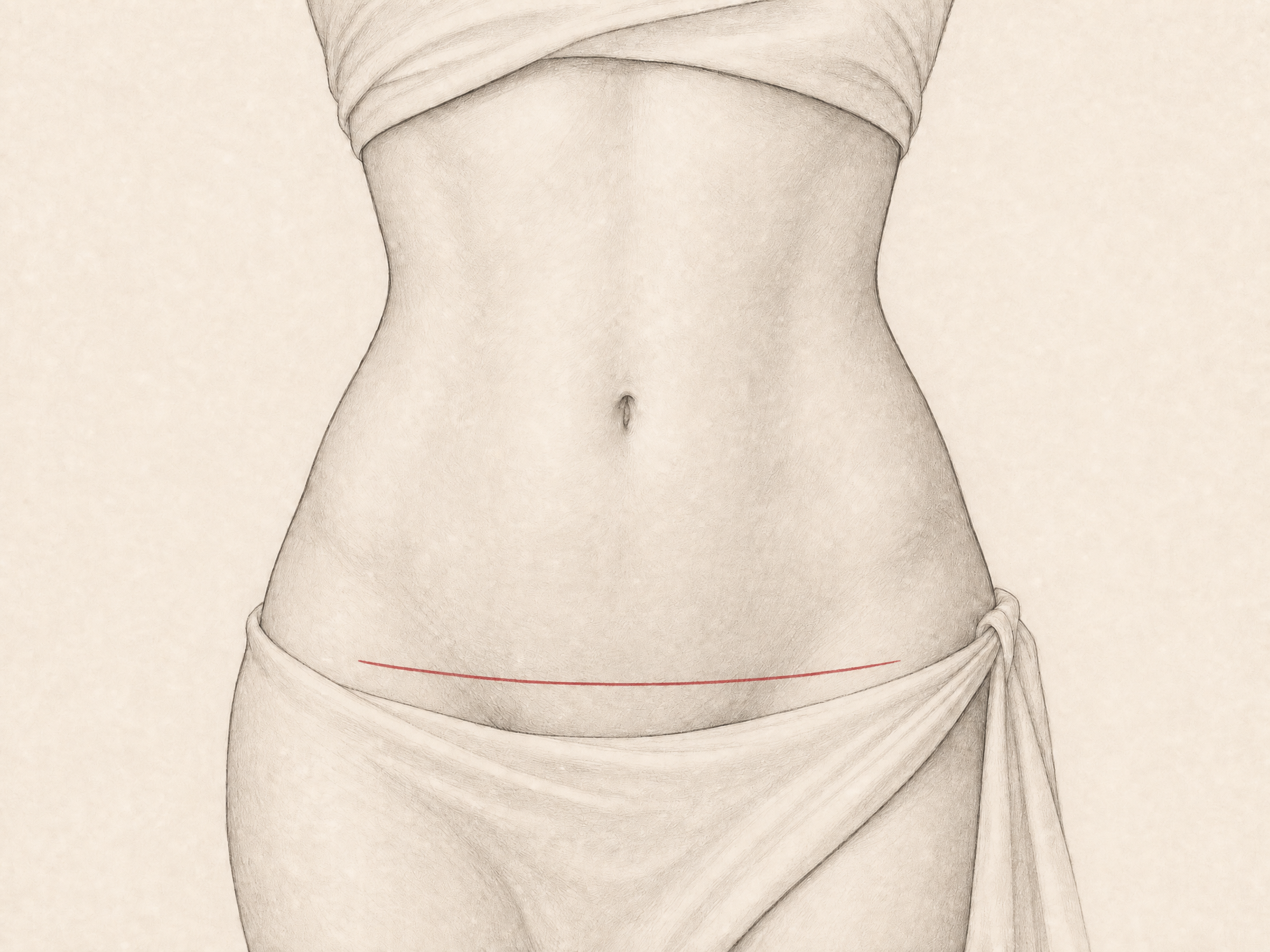
Mini Tummy Tuck

Treatment area

A smaller area of loose skin or fullness below the navel.

General incision pattern

A shorter, low horizontal incision.

A mini tummy tuck concentrates on the lower abdomen. It may be considered when skin laxity is limited below the navel and the upper abdomen has good skin quality. It is a more focused option, not simply a smaller version of every tummy tuck.
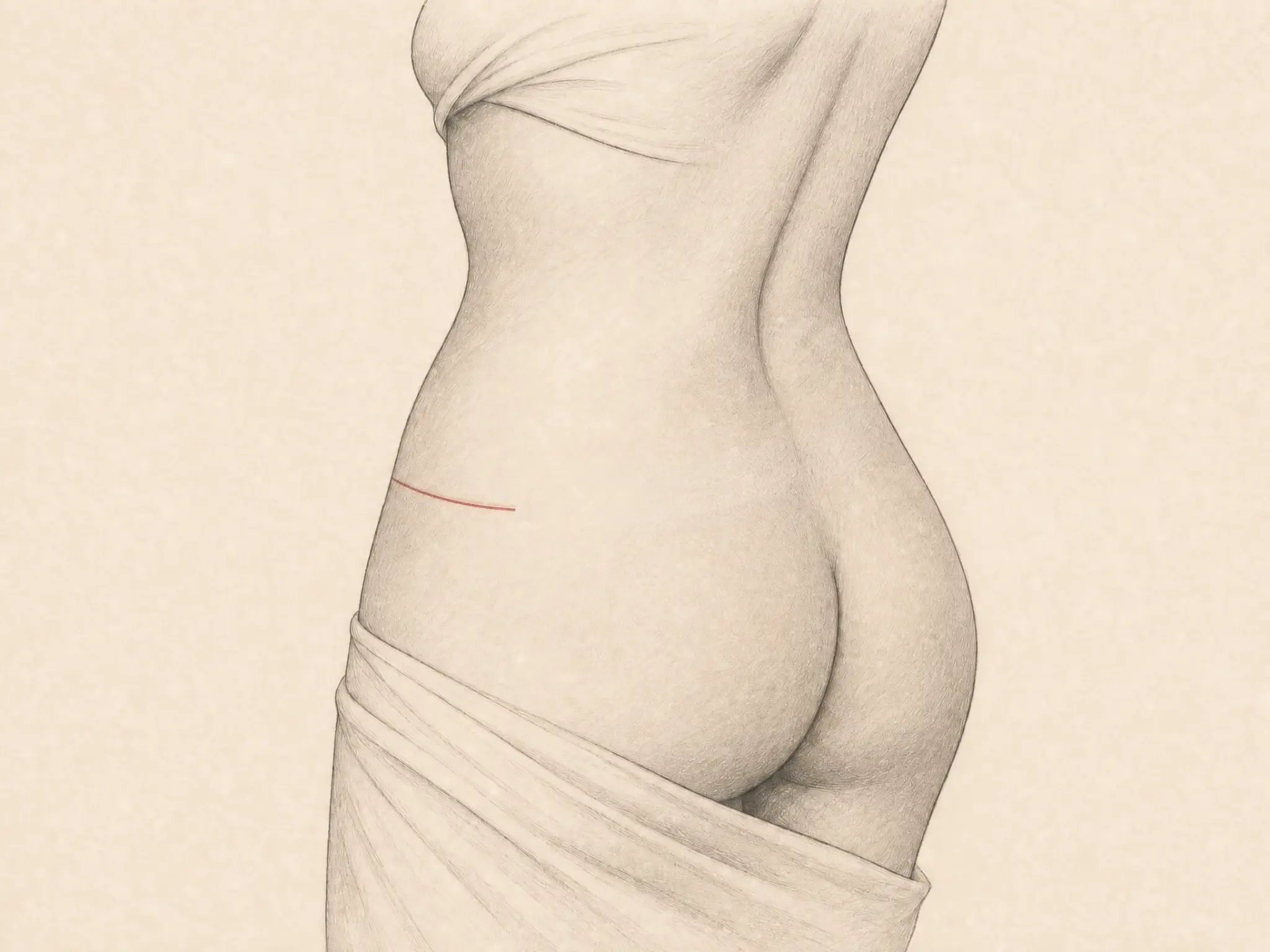
Standard Tummy Tuck educational treatment-area illustration

Option 02

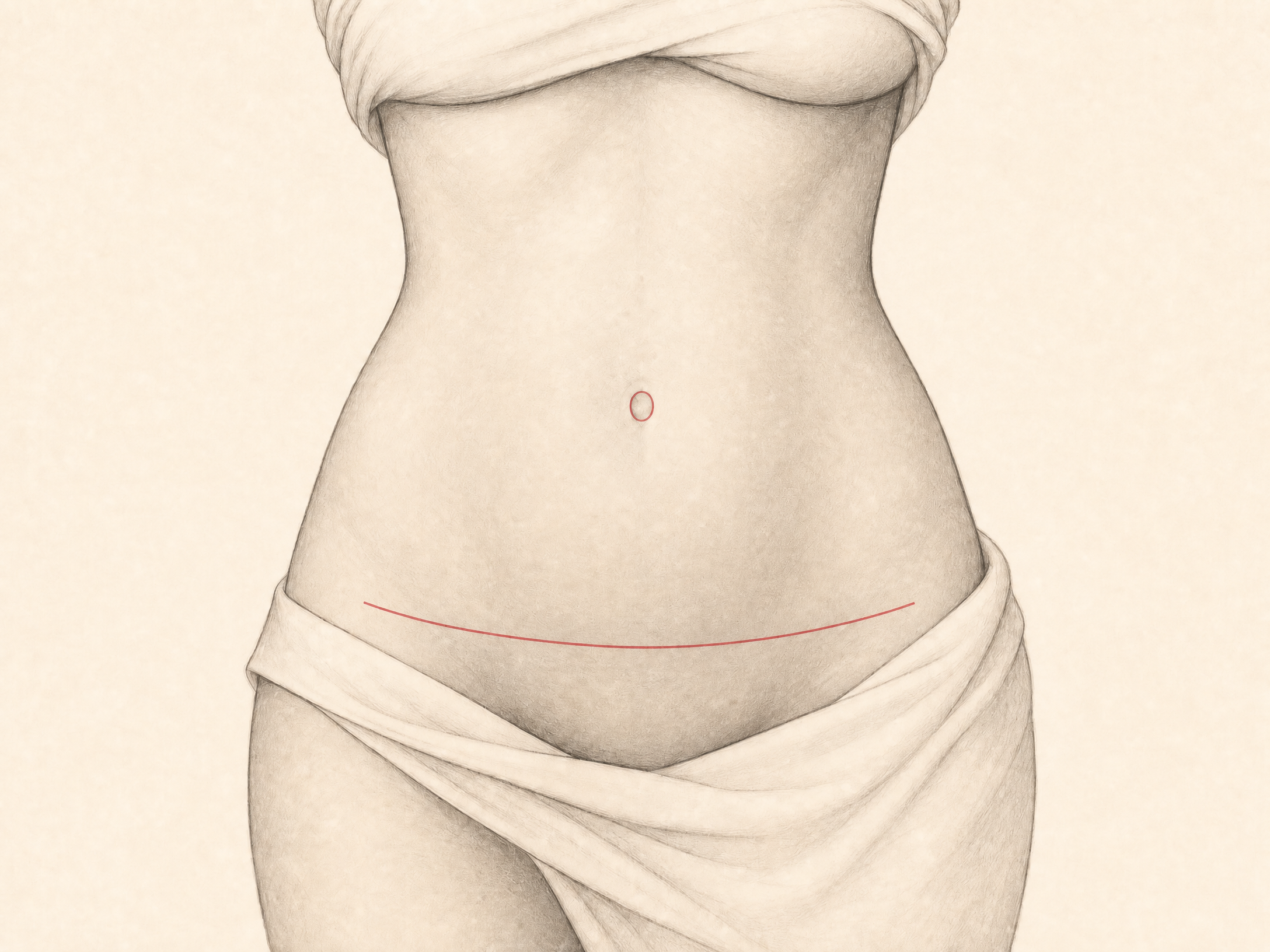
Standard Tummy Tuck

Treatment area

The upper and lower abdomen.

General incision pattern

A low horizontal incision; a navel incision may be needed depending on the surgical plan.

A standard tummy tuck is designed to address excess abdominal skin across the central abdomen. It may also include muscle repair when separation or laxity is present. The goal is a smoother, firmer abdominal contour tailored to your anatomy.

Extended Tummy Tuck educational treatment-area illustration

Option 03

Extended Tummy Tuck

Treatment area

The abdomen, hips, and outer flanks.

General incision pattern

A low horizontal incision that extends farther toward the hips.

An extended tummy tuck broadens treatment beyond the central abdomen to include the sides of the waist. It can be appropriate when loose skin or contour concerns continue toward the hips and flanks, including after significant weight changes.

Circumferential Tummy Tuck / Body Lift educational treatment-area illustration

Option 04

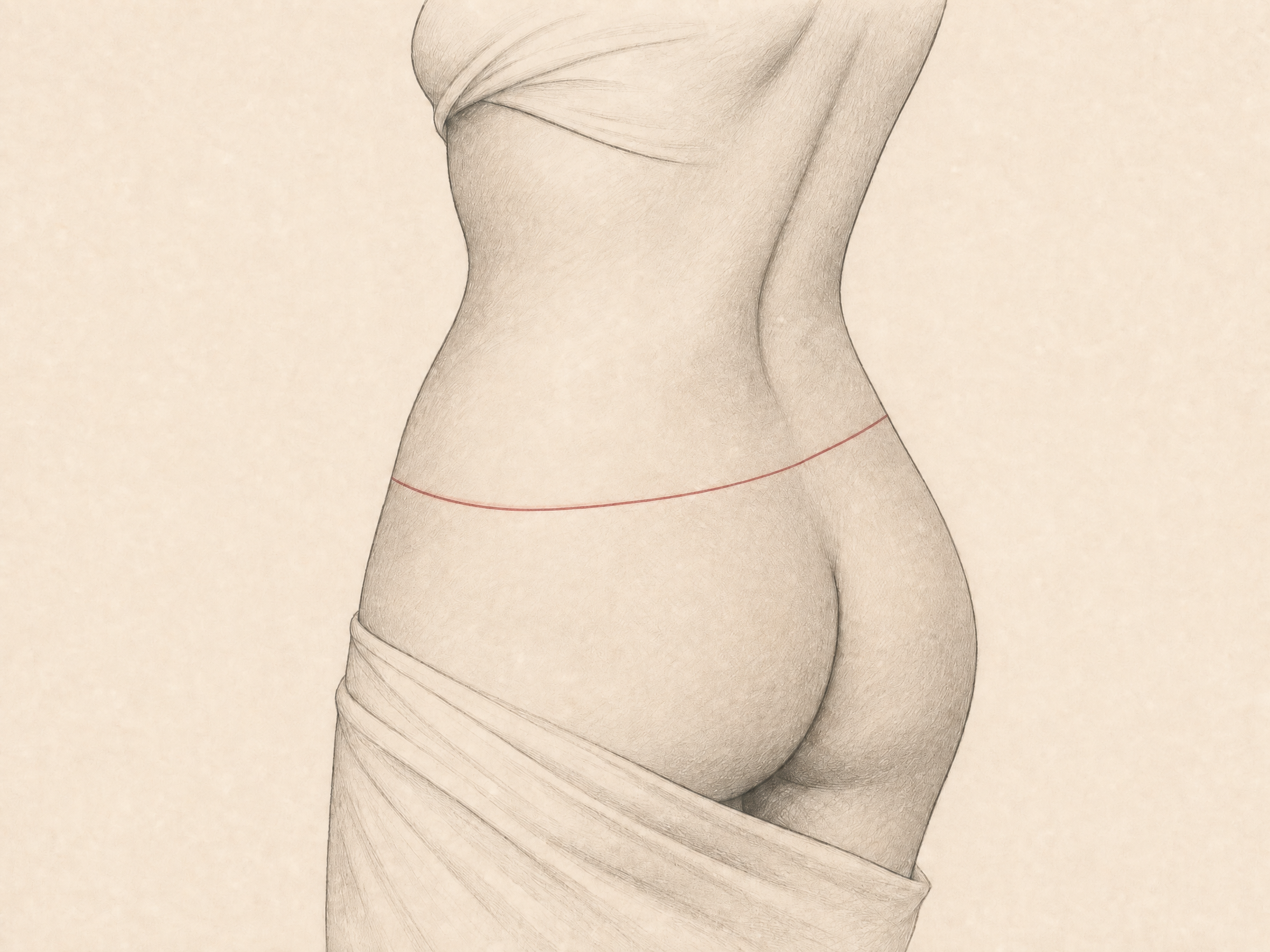
Circumferential Tummy Tuck / Body Lift

Treatment area

The abdomen, flanks, hips, and lower back.

General incision pattern

A belt-like incision that continues around the torso.

A circumferential tummy tuck, often called a lower body lift, treats loose tissue around the full lower torso rather than the abdomen alone. It may be considered after major weight loss when there is significant excess skin in both the front and back of the body.

Fleur-de-Lis Tummy Tuck educational treatment-area illustration

Option 05

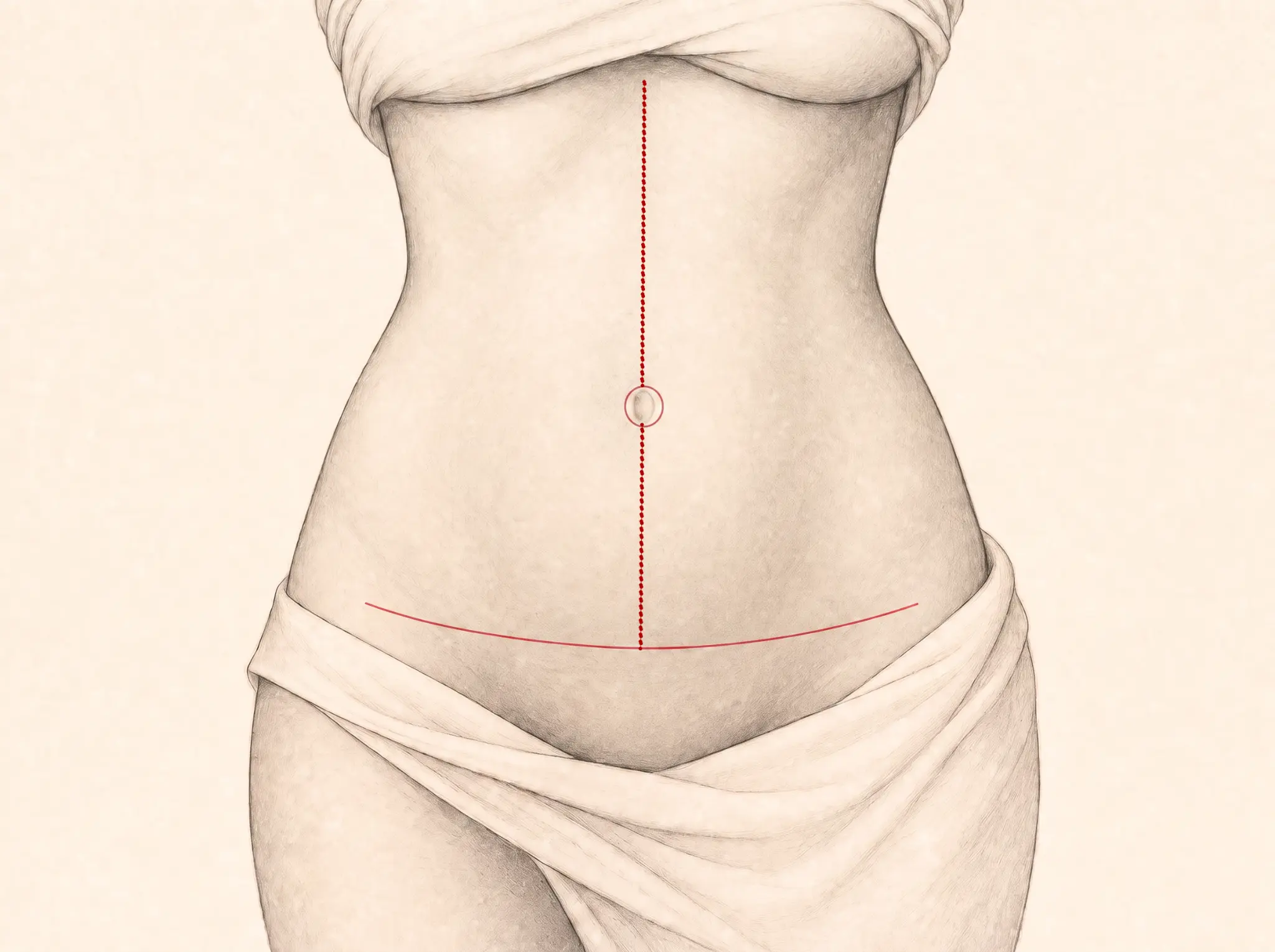
Fleur-de-Lis Tummy Tuck

Treatment area

The central abdomen and waistline, including both vertical and horizontal skin excess.

General incision pattern

A low horizontal incision plus a vertical midline incision extending past the bellybutton toward the xiphoid area.

A fleur-de-lis tummy tuck adds a vertical scar that travels from the lower-abdominal incision, straight up the center of the abdomen, past the bellybutton, and toward the xiphoid area. It can provide more extensive contouring for selected patients with substantial skin excess, commonly after significant weight loss, while accepting an additional scar.

These illustrations are educational and show general treatment areas and incision patterns only. Dr. Rosett will recommend the most appropriate technique after an in-person evaluation.

Frequently Asked Questions

Yes — a tummy tuck does leave a permanent scar along the lower abdomen, but Dr. Rosett places incisions carefully so they are hidden beneath underwear and swimwear. Scars fade significantly over 12–18 months.

Absolutely. Many patients combine a tummy tuck with liposuction, breast procedures, or other body contouring surgeries as part of a mommy makeover.

Cosmetic tummy tucks are generally not covered by insurance. However, if there is a functional component such as a skin fold causing rashes or infections, a panniculectomy (the lower portion) may qualify for coverage.

Results are long-lasting with a stable weight. Pregnancy after a tummy tuck can alter results, so it is generally recommended to complete your family before undergoing the procedure.

Most patients take 1–2 weeks off work for a desk job. Physical activity is restricted for 4–6 weeks. You will wear a compression garment for several weeks to reduce swelling and support healing.

A tummy tuck can remove stretch marks located on the skin that is excised below the navel. Stretch marks above the navel may be repositioned lower but will not be removed.

A mini tummy tuck addresses only the lower abdomen below the navel and is best for patients with minimal excess skin. A full tummy tuck addresses the entire abdomen, tightens muscles, and repositions the navel — it provides more comprehensive results for most patients.

Light walking is encouraged within a few days. You may resume light cardio at 4–6 weeks and return to full exercise including core work at 6–8 weeks, as guided by Dr. Rosett at your follow-up appointments.

Good candidates are in overall good health, have realistic goals, and are prepared to follow the recovery plan. Dr. Rosett will review your anatomy, medical history, and priorities during a personal consultation.

Surgery is performed in an outpatient surgery setting. Your surgical setting and plan will be confirmed after your consultation and preoperative review.

The anesthesia plan depends on the extent of surgery and whether procedures are combined. Dr. Rosett and the anesthesia team will review the appropriate plan and safety considerations before surgery.

Surgical time varies with the technique, your anatomy, and whether additional procedures are performed. Dr. Rosett will give you a more tailored estimate during your consultation.

Preparation typically includes a medical review, medication guidance, nicotine cessation when applicable, and arranging help for the first part of recovery. You will receive detailed preoperative instructions before surgery.

Yes. Nicotine can impair healing and increase complication risk. Dr. Rosett will provide specific cessation requirements and timing before considering surgery.

Some medications and supplements may need to be adjusted before surgery. Never stop a prescribed medication on your own; Dr. Rosett and your prescribing clinician will provide individualized guidance.

You will be monitored in recovery and sent home with written instructions, medication guidance, and a postoperative plan. The exact experience depends on the procedure and whether other surgeries are combined.

Discomfort varies by procedure and individual. Dr. Rosett uses a tailored pain-management plan and will explain what is expected, how to stay comfortable, and when to contact the office.

Time away from work depends on the physical demands of your job and the extent of surgery. Many patients plan for at least one to two weeks before returning to desk work, but your recommended timeline will be individualized.

You should not drive while taking prescription pain medication or until you can move comfortably and safely. Dr. Rosett will advise you based on your recovery progress.

Walking is commonly encouraged early in recovery, while strenuous exercise and heavy lifting are delayed until healing is well underway. Your return-to-exercise plan will be based on your procedure and follow-up examinations.

Some procedures benefit from a compression garment or surgical support garment to help with swelling and comfort. Dr. Rosett will let you know whether one is recommended and how long to wear it.

Swelling improves gradually and the timeline varies by procedure. Early changes are expected during the first weeks, while final contour and scar maturation can continue to evolve over several months.

You will usually see an early change soon after surgery, but final results develop gradually as swelling resolves and tissues settle. Dr. Rosett will explain the expected timeline for your specific procedure.

Any surgical procedure creates scars. Dr. Rosett plans incisions thoughtfully, and your scar appearance depends on the technique, your anatomy, skin type, and how you heal.

Follow your incision-care instructions, avoid nicotine, protect healing scars from sun exposure, and attend follow-up visits. Dr. Rosett may recommend scar-care products or treatments when appropriate.

Ready to get started?

Schedule a consultation with Dr. Rosett today.